
Areas of application

Injection molding for microelectronics.

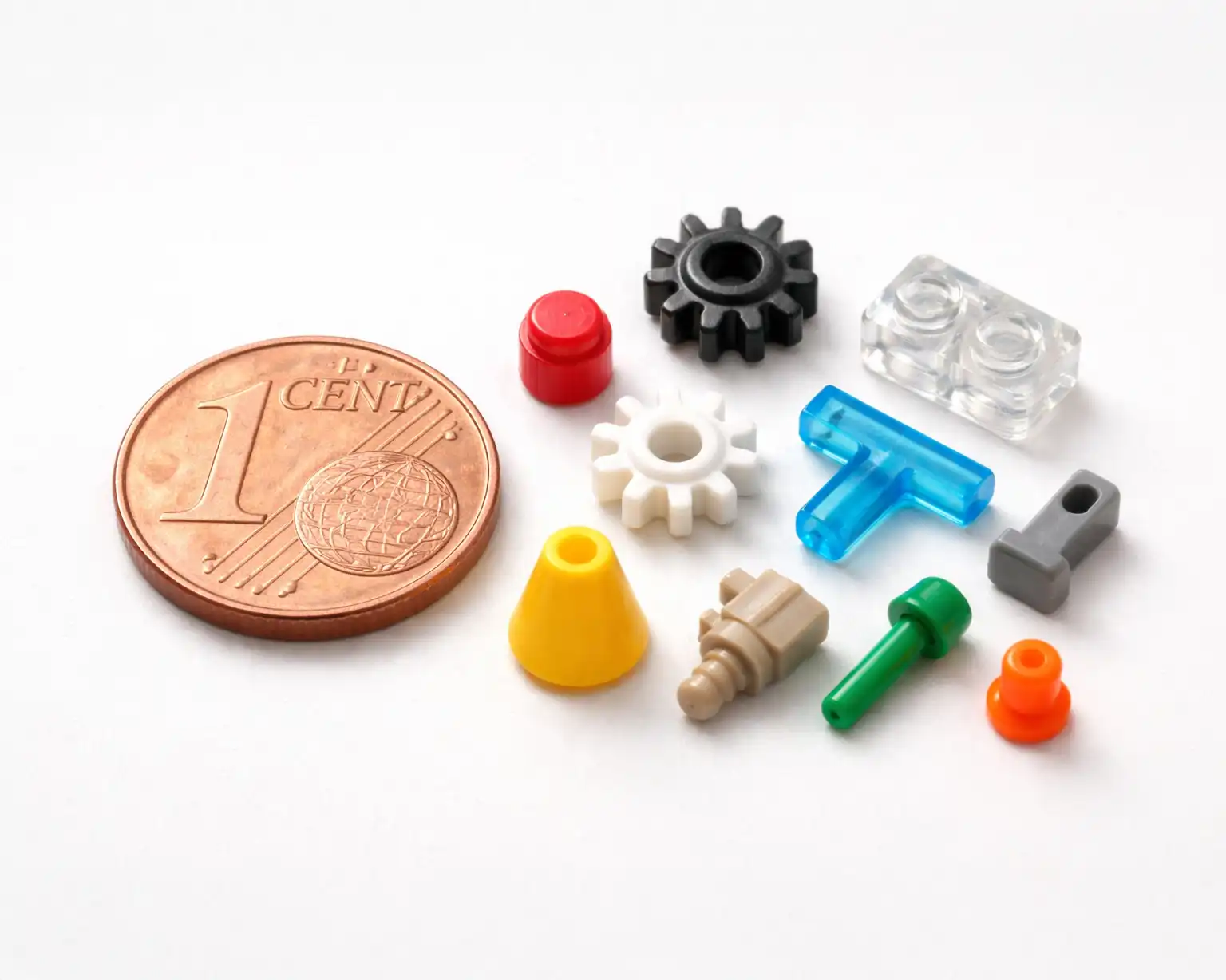
Components for microelectronics are often very small, delicate and functionally critical. Tight tolerances, reproducible quality and stable processes are essential to ensure that electronic components can be assembled and used reliably – also in serial and high-volume production.
High dimensional accuracy

Precise geometries for reliable assembly and function.

Reproducible quality

Consistent results over long production runs.

Small & delicate components

Suitable for fine structures and compact designs.

Designed for production

Stable processes even with increasing volumes.

Variety of microelectronic components

Small parts – wide range of applications.

Components in microelectronics vary greatly in size, geometry and function. From very small functional parts to more complex housing components, the range is much broader than pure dimensions might suggest.

Small plastic components for microelectronics

Component in application context

Invisible in the product – critical for function.

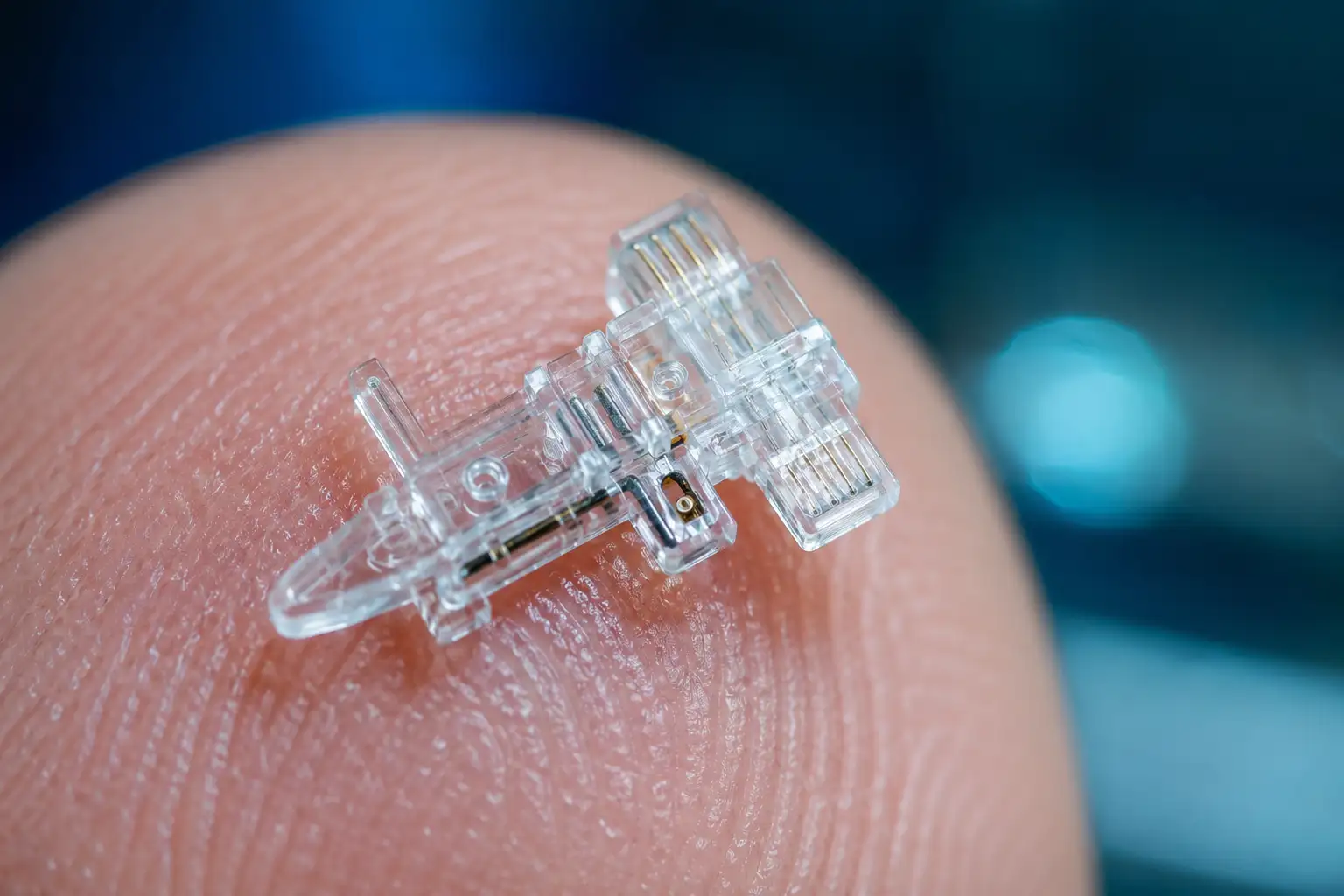
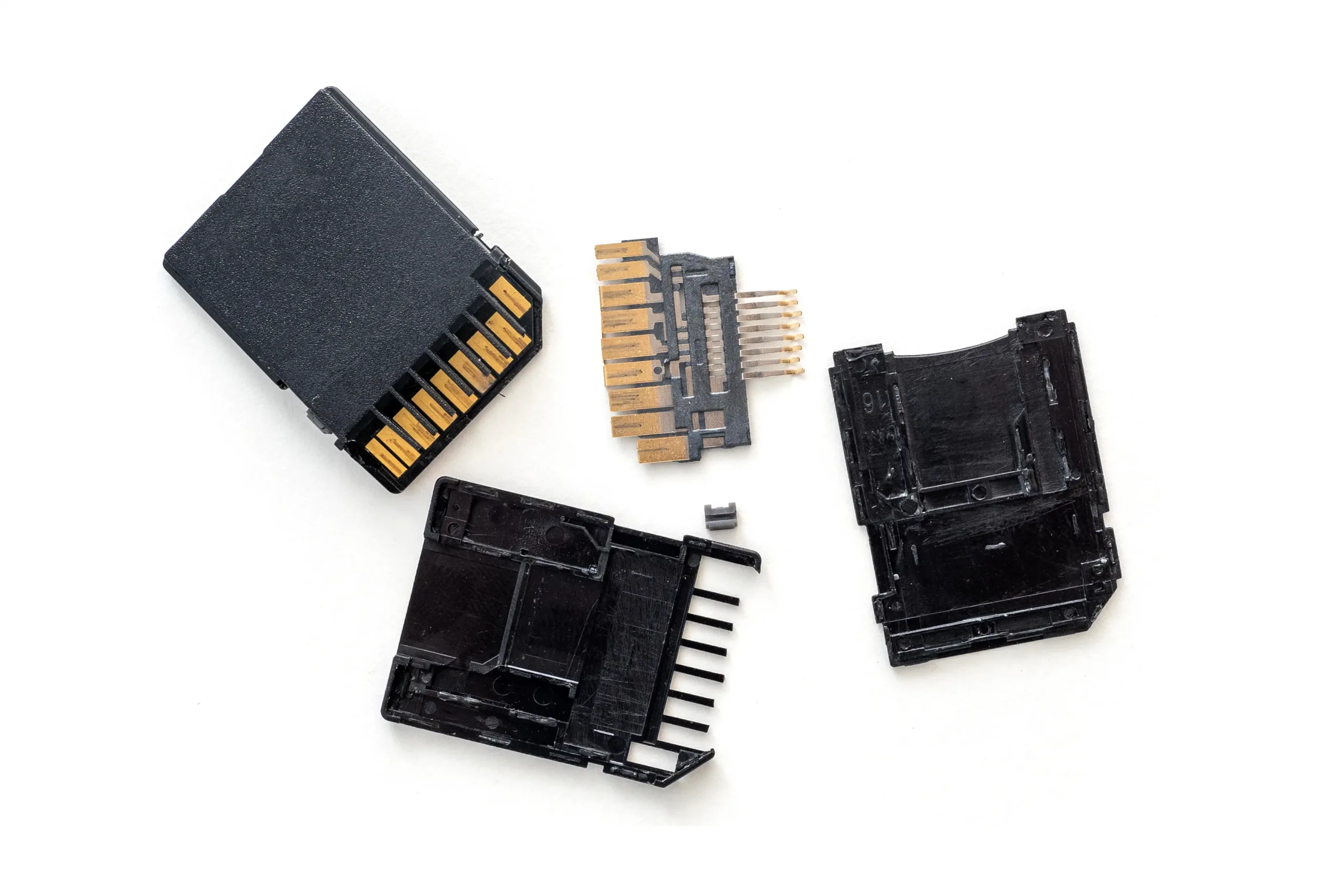
Many plastic components in microelectronics are not visible in the final product but perform essential tasks – such as protecting, positioning or guiding electronic components.
Frequently asked questions

FAQ about microelectronics

Because even small dimensional deviations can affect the function of electronic components or their assembly.

Yes. With coordinated tools, stable processes and in-process inspections, even small components can be manufactured consistently.

Yes. Processes are designed to deliver reproducible results even with increasing production volumes.

Depending on the application and tooling, very small and delicate precision parts can be produced using micro injection molding from approx. 0.1 g. Key factors are material, geometry and process stability.

Cleanliness is critical in microelectronics, as even the smallest contamination can affect assembly, function or further processing. Therefore, manufacturing, handling and packaging are designed for controlled and clean component handling.

Microelectronics refers to the field of electronics that deals with very small electronic components and circuits. In this context, electronic functions – such as computation, control or storage – are implemented in a tiny space, usually in the form of integrated circuits (chips).

A key feature of microelectronics is that many electronic components, such as transistors, resistors and capacitors, are integrated onto a single semiconductor chip. This makes devices smaller, more powerful, more energy-efficient and more reliable.

Microelectronics is now found in almost all modern applications – for example, in smartphones, computers, vehicles, medical technology, industrial equipment and household appliances – and forms the technical foundation of the digital world.

In the plastics industry, microelectronics plays a key role particularly where electronic functions need to be protected, secured or functionally integrated. Typical examples include:

  • Plastic sensor and electronics enclosures
    Plastic protects sensitive microelectronic components from moisture, dust, chemicals and mechanical stress – for example in industrial, automotive or medical applications.

  • Connectors and contact housings
    Precision-moulded plastic components hold contacts, circuit tracks or microchips precisely in place and ensure electrical insulation.

  • Overmoulding of electronic components
    Microelectronic components are overmoulded directly with plastic to provide them with lasting protection whilst also reinforcing them mechanically.

  • Support and mounting components for printed circuit boards (PCBs)
    Plastic frames, clips or spacers secure microelectronic assemblies within a product.

  • Control elements with integrated electronics
    Pushbuttons, switches or sensor elements in which plastic mechanisms and microelectronics are functionally combined.

These examples show that, in microelectronics, plastic does not merely serve a protective function, but is often a crucial component in the operation and integration of electronic systems.

Let’s realize your next project together.

Send us drawings or STEP data – we will check feasibility and get back to you shortly.

Upload data (ZIP files only)

Further information on data processing can be found in our privacy policy.
*Required field

Send us an email