
Stable processes for consistent quality.

Systematic serial production of plastic components.

In series production of plastic components, it’s not the first successful run that counts, but the ability to consistently repeat it. We ensure reproducible results, clear processes and a production line that runs reliably – day in, day out.

What we mean by plastic series production

Reliability starts in the process.

For us, production means clearly defined procedures, documented parameters and manufacturing processes that remain stable over time. Every step is designed to prevent deviations – not just correct them afterwards.
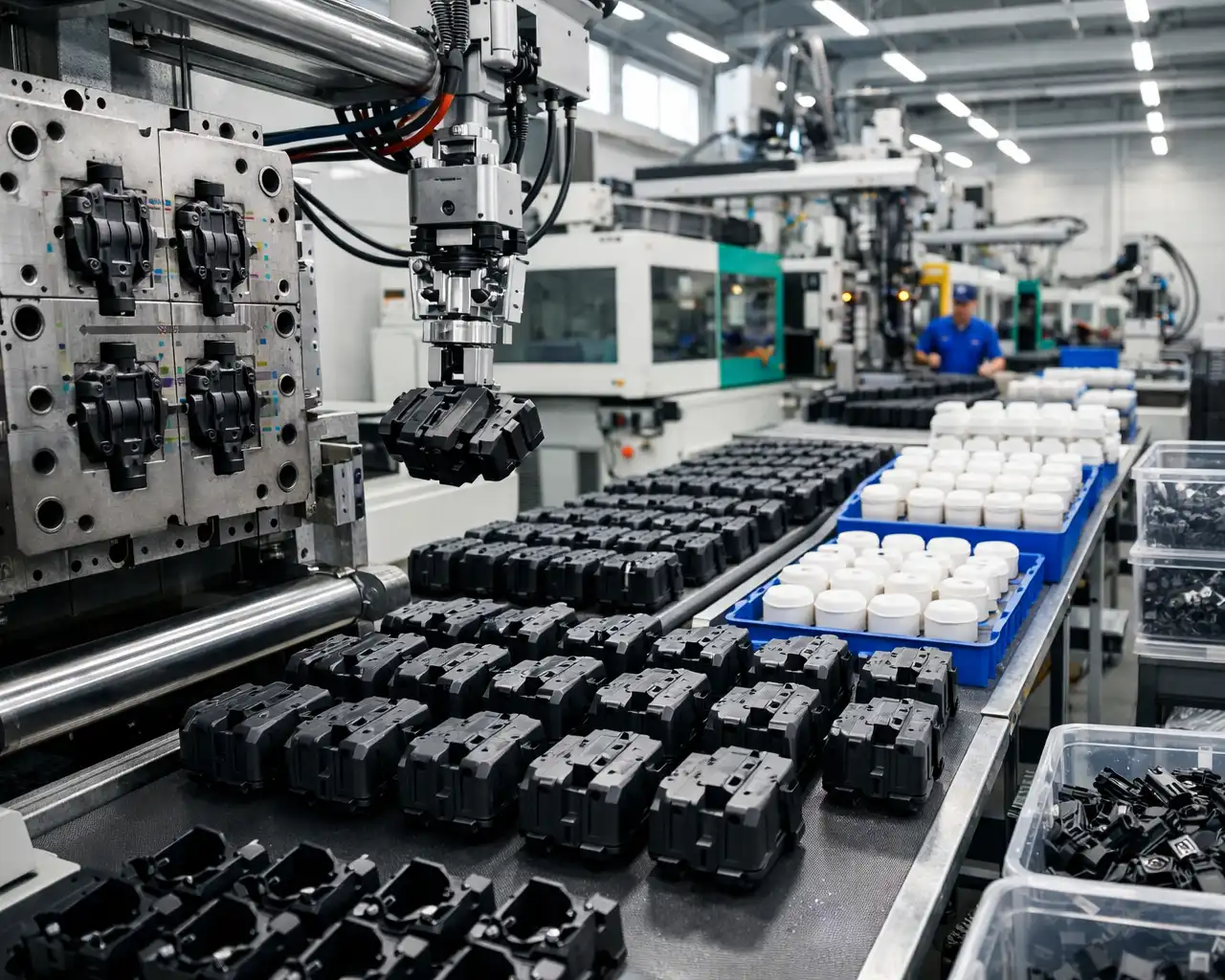
Documented
processes

Fixed parameters, clear procedures, reproducible results.

Production machine operation

Stable production designed for continuous operation.

Consistent quality

Serienüberwachung und regelmäßige Prüfungen.

Plannable processes

Defined time windows and coordinated delivery cycles.

The path to production

Structured from sample to production.

Machines & technical foundation

Technology for stable production.

Our series production of plastic components is carried out on over 30 state-of-the-art injection moulding machines – mainly Arburg. Automated removal and handling systems ensure consistent quality even during continuous operation.

Quality in series production of plastics

Quality is not a coincidence.

During production, processes are monitored, inspected and documented. This ensures that quality is not only achieved, but consistently maintained – regardless of runtime or production volume.

Plastic series production using injection moulding

Materials & component variety

Suitable for production across many applications.

We process a wide range of engineering plastics – tailored to function, load and application requirements.

Material selection and consulting are always application-specific – never generic.
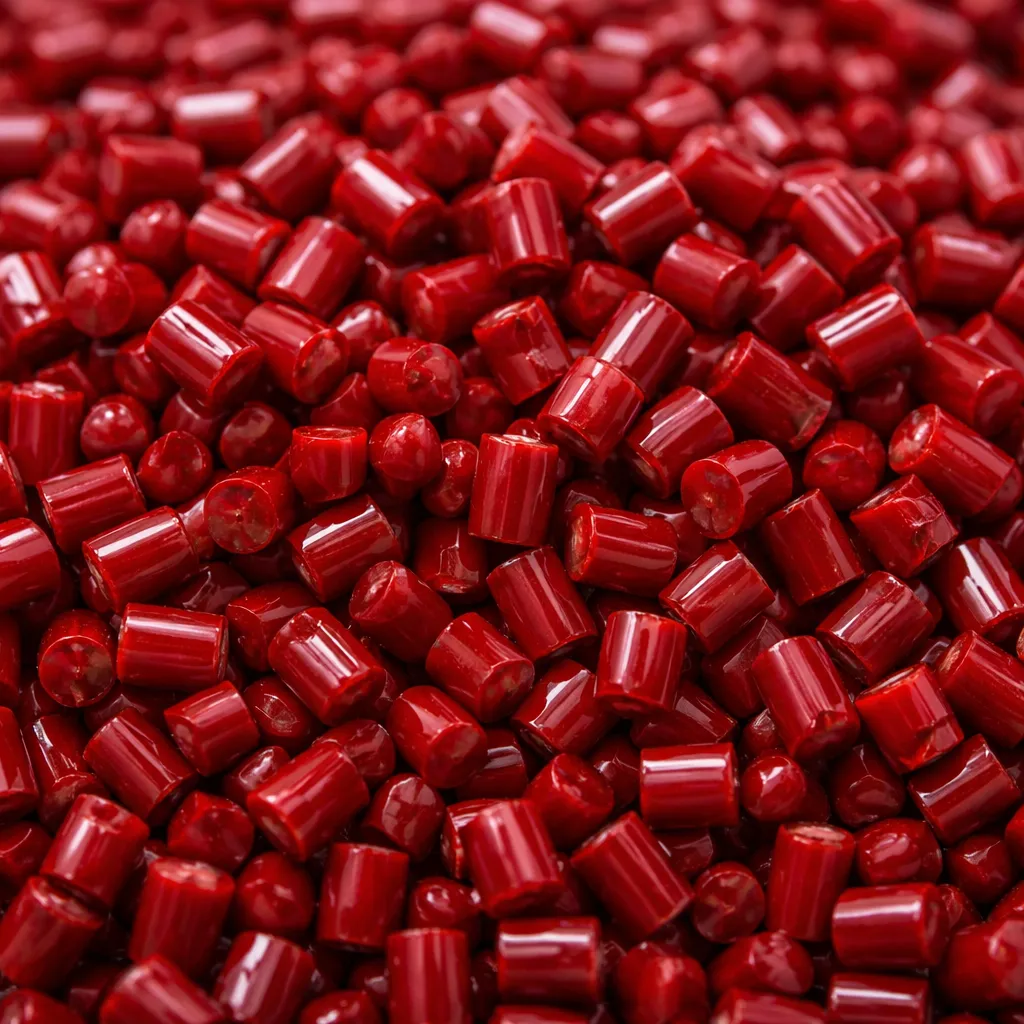
Red plastic granules

ABS
(Acrylonitrile Butadiene Styrene)
dimensionally stable, cost-efficient
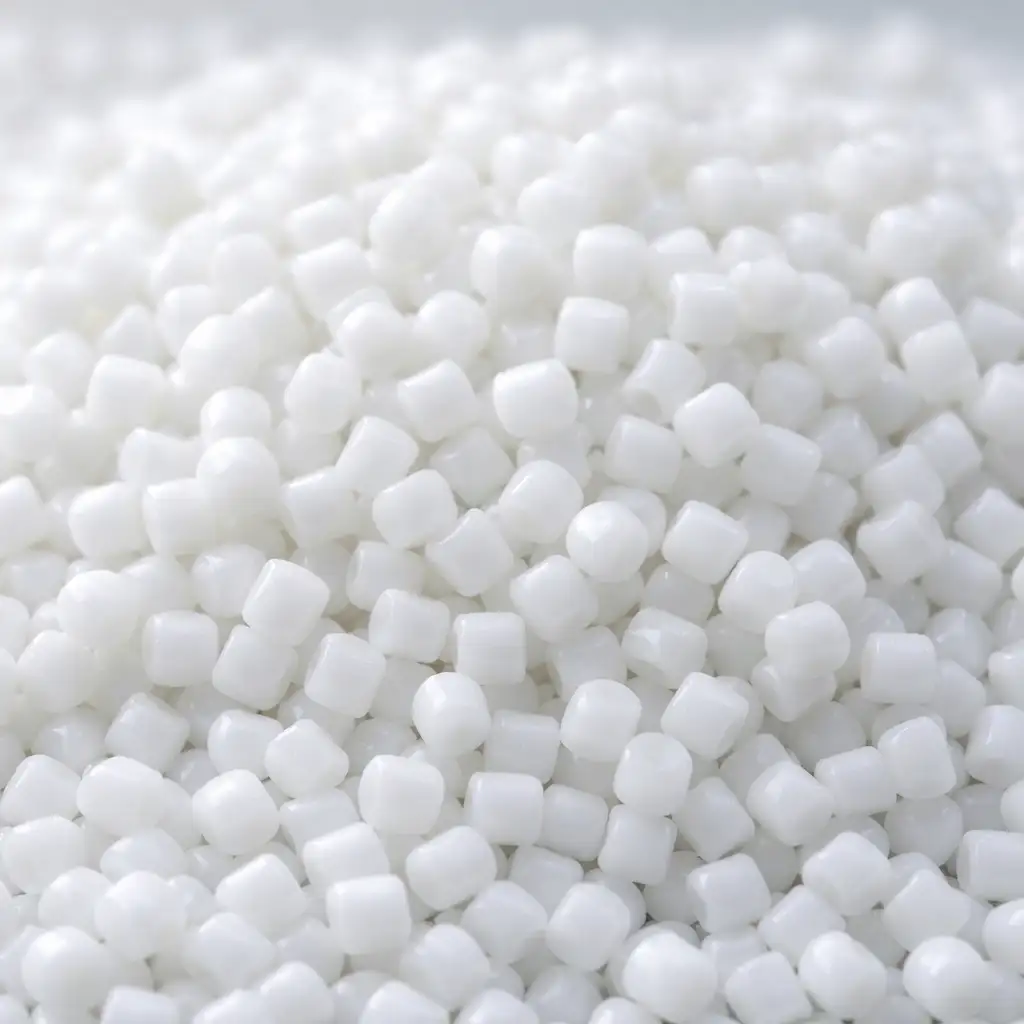
White plastic granules

POM
(Polyoxymethylene)
precise, low-friction
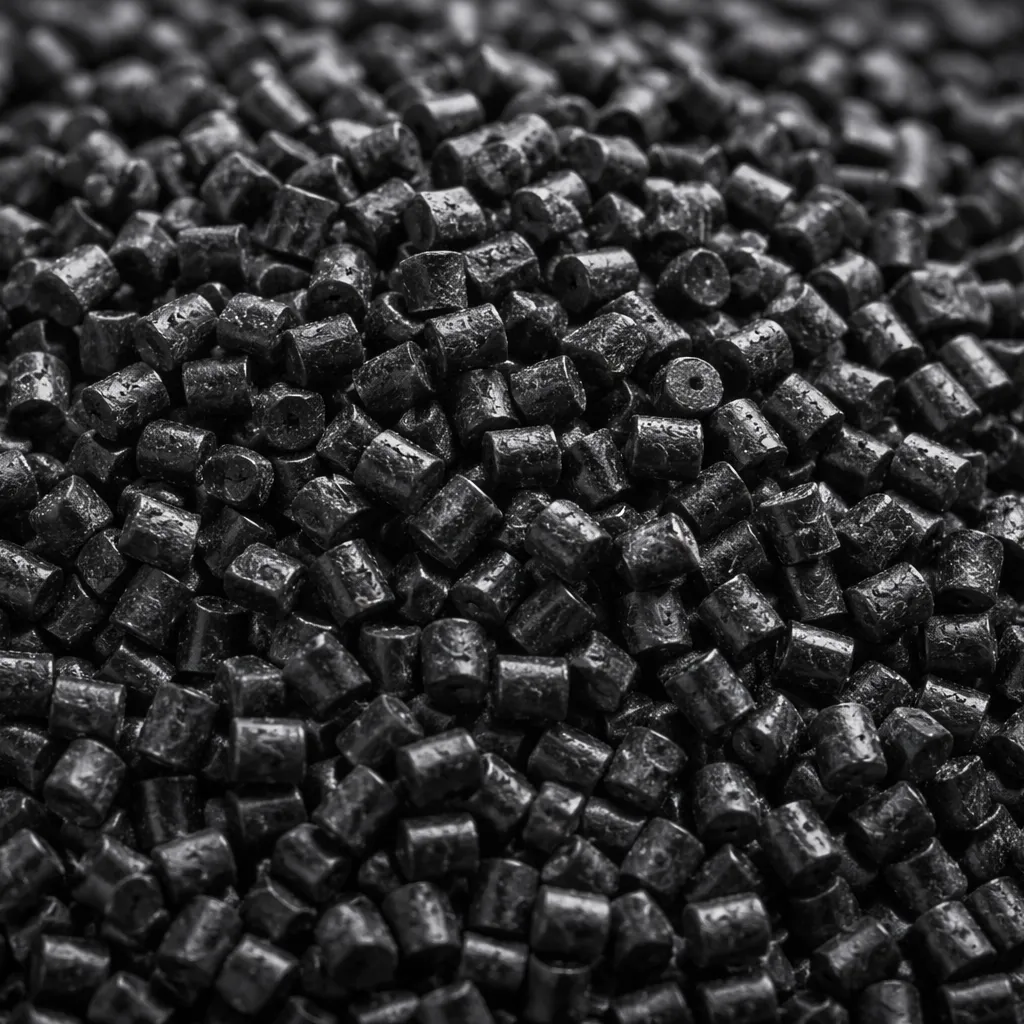
Black plastic granules

PA / PA-GF
(Polyamide / glass fiber reinforced polyamide)
high mechanical strength
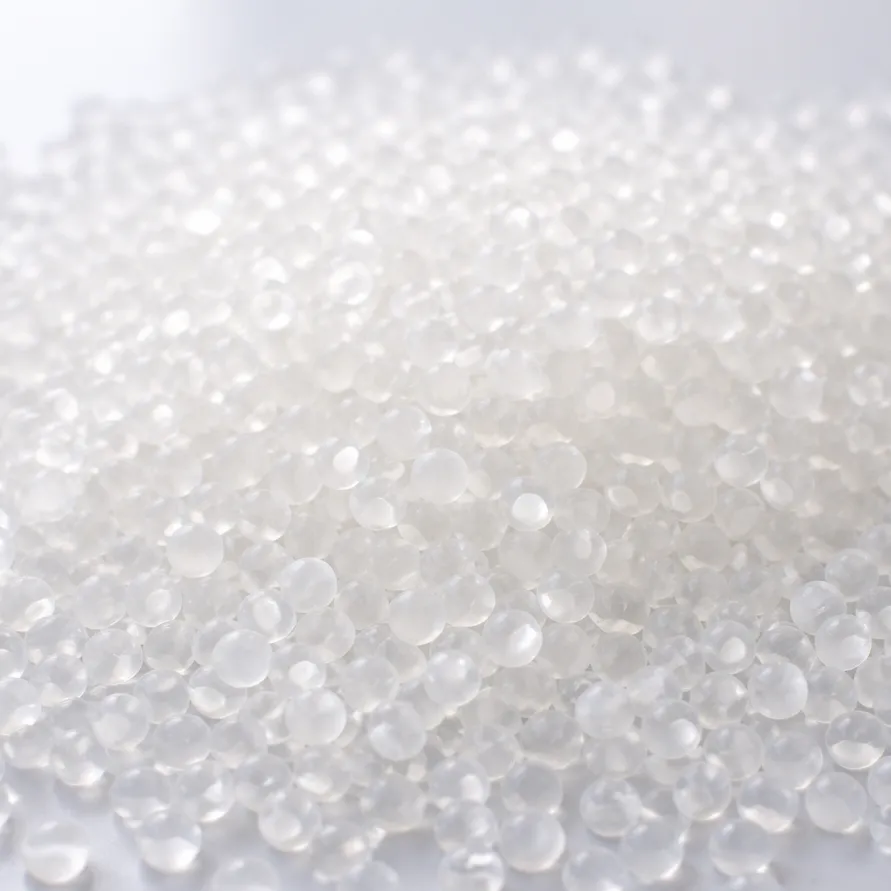
Transparent plastic granules

TPE / TPU
(Thermoplastic Elastomers / Thermoplastic Polyurethane)
flexible, functional

Logistik & Serienversorgung

Reliable supply – planned production.

With our own storage areas, coordinated delivery cycles and clear planning, we ensure smooth production supply – even with fluctuating call-off quantities.
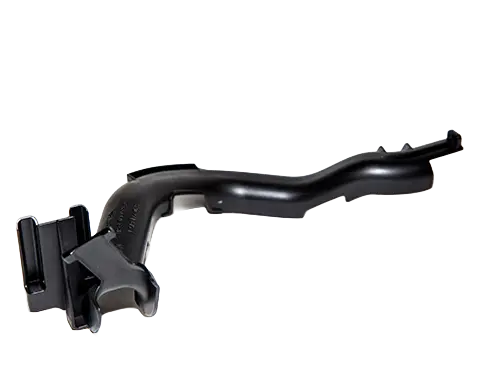
Engineered plastic component from serial-produced plastic parts for industrial applications

Frequently asked questions

FAQ about production

Through documented processes, fixed machine parameters, in-process inspections and continuous monitoring of production.

Production describes the structured, repeatable manufacturing process. High-volume production additionally refers to very high quantities and long production runtimes.

Yes. Process and tool optimizations can be evaluated and implemented without unnecessarily disrupting ongoing production.

Call-off models and coordinated delivery cycles are an integral part of our production projects.

Mass production means that a product is manufactured in the same specification multiple times in succession. All work processes, machinery and materials are tailored to this specific product. This allows many identical parts to be produced efficiently, with consistent quality and at lower cost. Mass production is typically used when a product is required on a regular basis and in large quantities.

Yes. Production is not limited to large components. Depending on the application and tooling, very small and delicate precision parts can also be produced reliably in micro injection molding from approx. 0.1 g. Key factors are proper tool design, stable processes and continuous process monitoring.

For very small and delicate components, process stability, tool design and material flow are critical. Even small deviations can affect function or assembly. Therefore, production is designed for stable parameters, clean demolding and continuous process monitoring.

Mass production offers clear advantages, particularly when products are manufactured to a consistent specification and in large quantities. Standardised processes, automated workflows and the efficient use of machinery can significantly reduce unit costs. At the same time, the fixed process structure ensures consistently high quality, a high degree of repeatability, and production and delivery times that are easy to plan.

However, these advantages are offset by a number of limitations. Mass production requires a significant amount of preparatory work – for example, in terms of development, tooling and set-up processes – and is only economically viable once a certain production volume is reached. Furthermore, changes to the product during the production run are only possible to a limited extent.

It is therefore advisable to start with prototypes and a structured sampling process before moving on to series production. This allows components and assemblies to be tested under real-world conditions, functions to be verified, and materials, tolerances and surfaces to be fine-tuned. Changes can be implemented quickly and cost-effectively at this early stage, before significant investment is made in tools and series production processes. Prototypes and sampling thus provide the necessary certainty and form the basis for stable, high-quality and cost-effective series production.

Would you like to find out more about mass production in plastic injection moulding?

On our knowledge page, you will find a concise overview of small-batch and large-scale production, typical production processes, process stability, automation and the key economic factors.

Let’s realize your next project together.

Send us drawings or STEP data – we will check feasibility and get back to you shortly.

Upload data (ZIP files only)

Further information on data processing can be found in our privacy policy.
*Required field

Send us an email